
Building the Future of Food with Advanced Cold Storage Solutions in China
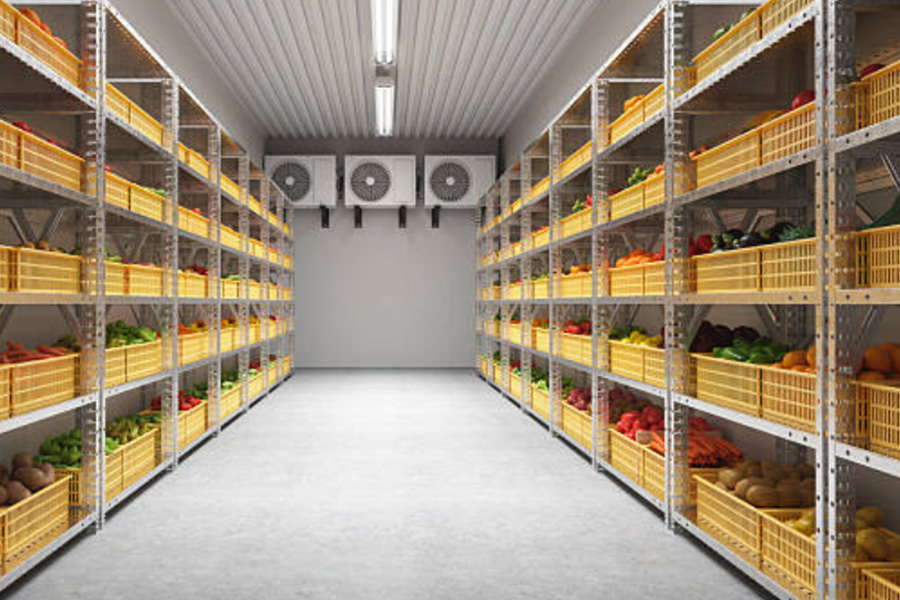
Picture a massive harvest of crisp apples in Shandong province, or a truckload of tender leafy greens from Yunnan heading to a supermarket in Shanghai. Without the invisible backbone of temperature-controlled logistics, much of that bounty would rot before it ever reached a plate. This is where the role of a China cold storage solution provider becomes not just helpful, but essential. These companies are the unsung heroes of modern food systems, quietly engineering the infrastructure that keeps our produce farm-fresh from field to fork. Their work is reshaping how China thinks about food waste, supply chain reliability, and the sheer potential of preserving nature’s clock.
The urgency for sophisticated cold storage has never been clearer. As China’s urban population swells and e-commerce giants promise next-day delivery of everything from mangoes to mushrooms, the pressure on the post-harvest chain is immense. A simple warehouse with a few fans and a compressor simply won’t cut it anymore. What we need are intelligent, adaptive environments that respond to the specific breathing patterns of each crop. This is exactly the niche that a China cold storage solution provider fills—designing facilities that are as much about data as they are about insulation, ensuring that every degree of temperature and every percentage point of humidity is meticulously controlled. It’s a shift from mere storage to active preservation, a fundamental rethinking of how we treat our food after it leaves the soil.
When we zoom in on the most delicate segment of this industry—fresh fruits and vegetables—the challenges multiply. A potato is not a strawberry. A head of lettuce has different needs than a bunch of bananas. Each variety responds uniquely to temperature, ethylene gas, and air circulation. This is where specialized Fruits and Vegetables Cold Storage Construction Solution really shines. These aren’t neutral boxes, they are custom-built climates. A good contractor understands that you can’t just slap a refrigeration unit on a concrete room. They consider airflow patterns to prevent hotspots, they install humidity control to stop leafy greens from wilting, and they design for precise zoning so that apples and onions, which emit ethylene gas, never share the same space as ethylene-sensitive broccoli. It’s a science as much as a craft, and the best providers treat it with the seriousness of a laboratory.
So, what does that construction process actually look like on the ground? It starts long before the first panel is erected. A forward-thinking Fruits and Vegetables Cold Storage Construction Solution begins with a deep audit of the client’s product mix. Are we storing mostly root vegetables for long-term hold, or are we handling high-turnover berries that need to be in and out in 48 hours? The answer dictates everything: the thickness of the insulation, the choice between brine cooling and air cooling, the layout of loading docks to minimize door openings. The next step is selecting materials that can handle the constant battle against moisture, frost, and decay. High-density polyurethane panels with stainless steel linings are becoming the norm, not just for cleanliness but for energy efficiency. Every seam, every door seal, every light fixture is chosen to maintain that invisible, perfect blanket of cold air.
But the real game-changer in modern projects is the control system. A decade ago, a thermostat and a timer were all you needed. Now, a sophisticated China cold storage solution provider integrates IoT sensors that report real-time temperature and humidity fluctuations directly to a manager’s phone. Some advanced facilities even use AI algorithms that predict when a room is about to shift out of its optimal range and adjust the system preemptively. This predictive power means less spoilage, lower energy bills, and far less waste. It also means that a single facility can manage multiple micro-climates simultaneously—a tropical fruit room sitting just a few yards away from a freezer for frozen peas—without any cross-contamination of air or temperature.
Let’s talk about the people who build these spaces. The craftsmen and engineers who execute a Fruits and Vegetables Cold Storage Construction Solution are a specialized breed. They have to understand thermodynamics, food science, and even biology. They know that concrete needs to cure in a certain way when it’s going to be constantly chilled. They know that electrical wiring has to be rated for condensation-prone environments. They also understand the business side: that every day a facility isn’t operating is lost revenue for the farmer or the distributor. So they work fast, but never recklessly. They bring prefabricated components to the site to minimize on-site construction time, and they test every system to the breaking point before signing off. Their dedication is what turns a blueprint into a lifeline for the perishable goods that fuel our cities.
Beyond the mechanics, there is a larger philosophy at play. India loses about 40% of its produce annually due to inadequate storage, China has historically struggled with similar figures. But by scaling up advanced Fruits and Vegetables Cold Storage Construction Solution, we are creating a future where that waste ratio can be dramatically cut. This isn’t just a business opportunity—it’s an environmental one. Every apple saved from rot is a unit of carbon that wasn’t emitted rotting in a landfill. Every lettuce head that reaches a consumer instead of a dumpster represents water, fertilizer, and labor that wasn’t wasted. So when a China cold storage solution provider builds a new facility, they are not just adding square footage to a real estate portfolio. They are actively building resilience into the food system, one insulated panel at a time.
The construction itself is a dance of precision and scale. For a large-scale project, the foundation might take weeks, with specialized floor heating systems embedded in the concrete to prevent frost heave—a disastrous phenomenon where frozen ground expands and cracks the floor. Walls are assembled like giant Lego blocks, with cam-locking mechanisms that create airtight seals. The roofing system must handle massive weight if snow accumulates, while also supporting evaporators and air handlers. And all of this must be done while coordinating with refrigerant piping, drainage for defrost cycles, and emergency power systems. A China cold storage solution provider orchestrates this chaos into a symphony, making sure that the electrical team isn’t working in the same spot as the insulation crew, and that the whole thing comes together on time and budget.
Looking ahead, the trend is clear: customization and intelligence will only deepen. We are already seeing prototypes of mobile cold storage units that can be dropped in remote farming villages, powered by solar panels, and connected to a cloud dashboard. These modular units are essentially plug-and-play versions of a Fruits and Vegetables Cold Storage Construction Solution, tailored for small-scale farmers who are the backbone of China’s agricultural diversity. The same technology that protects a million-dollar inventory in a coastal city can now protect a two-ton harvest in a mountain valley. This democratization of cold chain technology is what excites me most—the idea that advanced preservation is no longer a luxury for big players, but a tool within reach for anyone who grows food.
In conclusion, the cold storage industry in China is not just about big refrigerated warehouses. It’s about a holistic approach to safeguarding our food future. Whether it’s a massive distribution hub serving a megacity or a small fabric building servicing a cooperative, every project is a vote for less waste and more nourishment. As you edit your next piece, remember that behind every perfect strawberry in a Beijing supermarket, there is a carefully designed cold room that made it possible. And at the heart of that room is the expertise of a China cold storage solution provider, the specialized craft of a Fruits and Vegetables Cold Storage Construction Solution, and a quiet, relentless commitment to building a better, cooler, and more sustainable way to feed the world.

Leave a reply
You must be logged in to post a comment.